

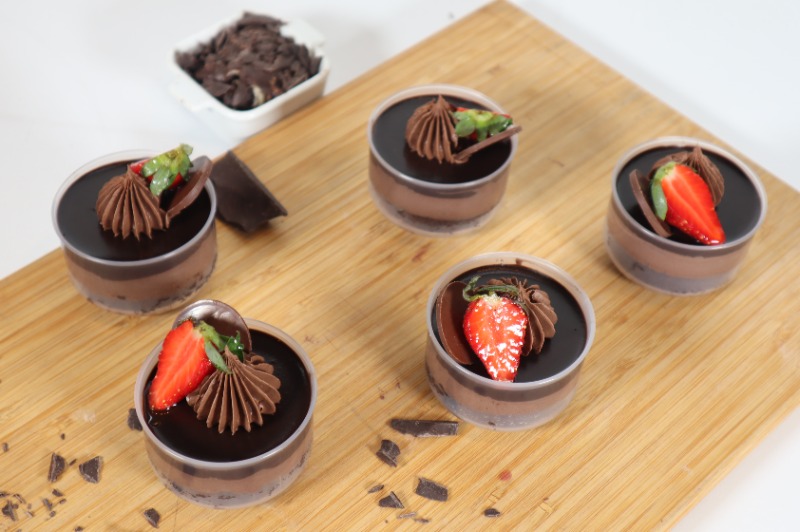
Desserts are becoming increasingly diverse in many places, both in appearance and flavor. One dessert that has consistently remained a favorite is mousse cake, known for its soft, delicate texture and chilled serving style.
Mousse cakes are no longer limited to round or square shapes made using cake pans. Today, they come in increasingly creative presentations, including cups and plastic containers. The flavors are also becoming more diverse, ranging from chocolate, green tea, strawberry, and blueberry to red velvet.
According to the culinary encyclopedia Larousse Gastronomique, mousse is a dish processed to achieve a light, airy, and soft texture. It is gently combined using the folding technique and then molded. Mousse is typically served chilled. In French, mousse means “foam,” derived from the Latin word mulsa, a type of alcoholic beverage made from honey and wine that produces a generous amount of foam.
In the 18th century, the first recorded mousse was French chocolate mousse, documented by Menon in the book Supper at Court. The dessert became increasingly popular around 1900 and was further popularized by French painter and passionate cook Henri de Toulouse-Lautrec.
There are four main components used to make mousse:
1. Base
The base provides the main flavor of the mousse. Examples include melted chocolate, fruit purée, fruit curd, and crème anglaise.
2. Aerator
The aerator is the ingredient that gives mousse its light and airy texture. It typically consists of a combination of whipped egg whites and whipped cream.
3. Sweetener
The sweetener is sugar, which is incorporated into the egg whites to create a meringue mixture.
4. Gelling Agent
The gelling agent is usually powdered or sheet gelatin. This is an essential component when the mousse needs to be removed from a mold, as it helps the mousse maintain its shape. If the mousse is served directly in a glass, only a small amount of gelatin is needed.

